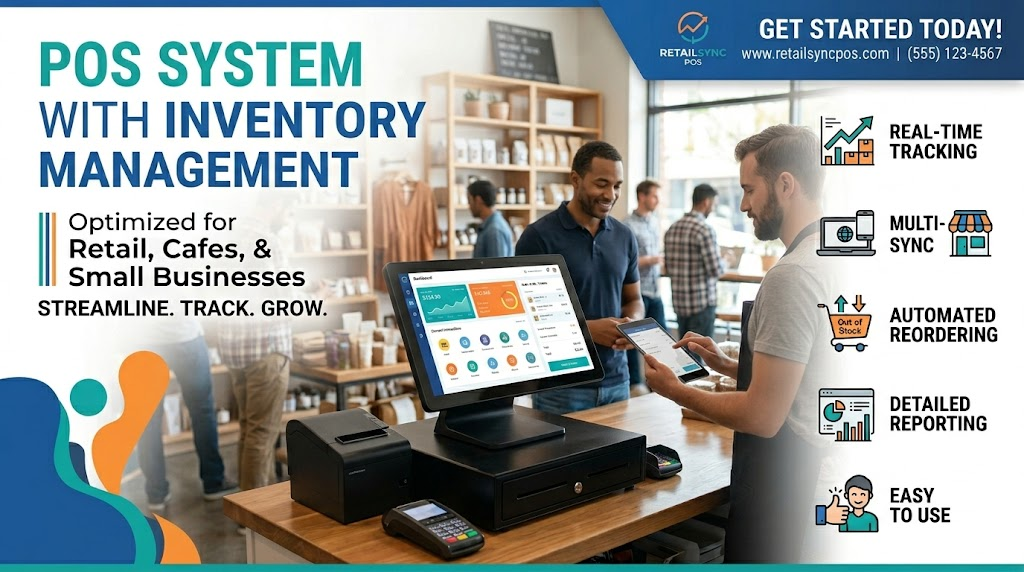
POS system with inventory management
Modern retail and service businesses face constant pressure to improve efficiency, reduce waste, increase customer satisfaction, and maintain accurate records. From small neighborhood stores to large retail chains, business owners now depend heavily on technology to simplify operations and improve decision-making. One of the most valuable tools available today is a digital point-of-sale solution that combines payment processing, stock tracking, reporting, and customer management into one centralized platform.
As consumer expectations continue to rise, businesses must respond with faster checkout experiences, better inventory control, and more accurate financial insights. Traditional cash registers and manual spreadsheets can no longer support the speed and complexity of modern commerce. Companies that fail to modernize often struggle with stock shortages, human error, delayed reporting, and poor customer experiences.
A POS system with inventory management helps businesses overcome these challenges by providing real-time visibility into products, sales, and stock movement. Instead of relying on guesswork or outdated manual methods, owners and managers can make informed decisions using live business data. Whether the company sells clothing, electronics, groceries, cosmetics, or restaurant items, this technology creates a more organized and profitable environment.
The retail landscape has changed dramatically over the past decade. Online shopping, mobile payments, omnichannel selling, and customer loyalty programs have become essential parts of commerce. Businesses now need solutions that connect physical stores with digital operations seamlessly. By integrating sales and inventory functions together, companies gain better control over every aspect of their workflow.
This article explores how modern retail systems transform business operations, improve customer service, reduce operational losses, and support long-term growth. It also explains important features, industry benefits, implementation strategies, and future trends shaping the next generation of retail technology.
The Evolution of Retail Technology
Retail businesses once relied entirely on handwritten records, paper receipts, and manual inventory counts. Employees had to track stock levels by physically checking shelves and storage rooms. Financial calculations often required hours of bookkeeping work, and business reports were frequently delayed or inaccurate.
As technology advanced, electronic cash registers replaced many traditional systems. These machines improved transaction speed but still lacked deeper analytical and inventory capabilities. Businesses could process payments faster, but they continued to face problems related to stock visibility, forecasting, and inventory accuracy.
The next major transformation came with cloud computing and integrated retail software. Businesses could now connect sales data directly to inventory records, employee management, and customer information. This integration significantly reduced manual labor and improved operational transparency.
Today, retailers operate in a highly competitive environment where efficiency matters more than ever. A POS system with inventory management has become an essential component for companies seeking to stay competitive in both physical and online markets. The integration of hardware and software allows businesses to automate routine tasks while improving overall productivity.
Technology adoption is no longer limited to large corporations. Small and medium-sized businesses can also access affordable solutions that provide enterprise-level functionality. Cloud-based platforms, mobile compatibility, and subscription pricing models have made advanced systems accessible to a broader range of industries.
In the United States, many retailers have accelerated digital transformation strategies to meet changing customer expectations and improve operational resilience. Businesses that embrace automation often experience faster service, stronger reporting capabilities, and better inventory control compared to competitors using outdated methods.
Why Inventory Accuracy Matters
Inventory is one of the most valuable assets in retail and product-based businesses. Poor inventory management can lead to serious financial losses, customer dissatisfaction, and operational confusion. When stock records are inaccurate, businesses may order unnecessary products, overlook shortages, or lose sales opportunities.
Accurate inventory management ensures that products are available when customers need them. It also helps companies avoid overstocking, which can increase storage costs and reduce profitability. Businesses with reliable inventory data can forecast demand more effectively and optimize purchasing decisions.
A POS system with inventory management provides real-time stock updates whenever a sale, return, or transfer occurs. This automation reduces the risk of human error while ensuring that inventory records remain current across all sales channels.
Inventory visibility is especially important for businesses operating multiple locations. Managers need to know which products are available at each store, warehouse, or distribution center. Integrated systems simplify this process by centralizing data into a single dashboard.
Businesses also benefit from better shrinkage control. Theft, damage, administrative mistakes, and supplier discrepancies can all affect inventory accuracy. Modern systems track product movement carefully, helping managers identify irregularities quickly.
Seasonal businesses benefit greatly from accurate forecasting and stock monitoring. Retailers selling holiday products, fashion collections, or promotional items need precise inventory insights to prepare for demand fluctuations. Without proper systems, businesses may either run out of popular products or remain stuck with unsold inventory.
Restaurants, pharmacies, electronics stores, and grocery chains all depend heavily on inventory accuracy to maintain smooth operations. In industries with perishable or high-value goods, even small inventory errors can create significant financial consequences.
Key Features Businesses Should Consider
Choosing the right retail technology solution requires careful evaluation of business needs, operational goals, and future growth plans. Not all systems offer the same functionality, so businesses should focus on features that improve efficiency and scalability.
One of the most important features is real-time inventory tracking. This capability automatically updates stock levels whenever products are sold, returned, exchanged, or transferred. Businesses can monitor stock movement instantly without relying on manual counts.
Another valuable feature is barcode scanning. Barcode technology speeds up checkout processes, reduces pricing errors, and improves inventory accuracy. Employees can process transactions quickly while ensuring product information remains consistent.
A POS system with inventory management should also include reporting and analytics tools. Business owners need access to sales trends, profit margins, inventory turnover rates, and employee performance metrics. Data-driven insights help managers make smarter decisions regarding purchasing, pricing, and marketing strategies.
Customer relationship management features are equally important. Many systems allow businesses to create loyalty programs, store customer purchase histories, and deliver targeted promotions. Personalized customer experiences can increase retention and encourage repeat purchases.
Cloud accessibility has become another essential feature. Cloud-based platforms allow business owners to access reports, monitor sales, and manage operations remotely using smartphones, tablets, or laptops. This flexibility supports modern business mobility and remote management.
Multi-location management is especially useful for expanding companies. Centralized systems enable managers to oversee inventory, sales, and staffing across multiple branches from a single interface.
Employee management tools can also improve accountability and efficiency. Features such as role-based permissions, time tracking, and sales performance monitoring help businesses manage staff more effectively.
Integration capabilities should never be overlooked. Modern businesses often use accounting software, e-commerce platforms, payment gateways, and marketing tools. Systems that integrate seamlessly with existing software reduce duplication and simplify workflows.
Benefits for Small Businesses
Small businesses often operate with limited staff, tighter budgets, and fewer operational resources. Efficiency becomes critical because owners and employees frequently handle multiple responsibilities simultaneously. Technology that simplifies operations can significantly improve productivity and profitability.
A POS system with inventory management allows small businesses to automate many time-consuming tasks. Instead of manually updating spreadsheets or counting stock repeatedly, employees can focus on customer service and business growth.
Improved checkout speed creates a better customer experience. Long lines and delayed transactions can frustrate customers and reduce satisfaction. Automated systems process payments quickly while maintaining accurate transaction records.
Financial reporting becomes easier and more transparent. Business owners can review daily sales, monitor profit margins, and track popular products without waiting for manual calculations. Better financial visibility supports smarter decision-making.
Inventory optimization also helps small businesses manage cash flow more effectively. Overstocking ties up valuable capital in unsold products, while understocking can lead to missed revenue opportunities. Accurate inventory data helps owners maintain balanced stock levels.
Mobile compatibility provides additional flexibility for smaller retailers. Business owners can monitor operations remotely, receive alerts, and access performance reports even when away from the store.
Many small businesses also benefit from integrated loyalty programs and customer databases. Personalized promotions and rewards encourage repeat visits and strengthen customer relationships.
Automation reduces administrative stress, allowing entrepreneurs to focus on growth strategies instead of repetitive operational tasks. This advantage is especially important for startups and family-owned businesses seeking sustainable expansion.
Advantages for Large Enterprises
Large retail organizations manage complex operations involving multiple locations, large inventories, extensive staffing, and high transaction volumes. Manual processes are simply not practical at this scale.
A POS system with inventory management enables enterprise-level businesses to centralize operations and improve consistency across all locations. Managers can monitor sales performance, stock levels, and operational trends from one unified platform.
Real-time visibility supports better supply chain coordination. Businesses can track inventory movement between warehouses, distribution centers, and retail stores efficiently. Automated replenishment features help prevent stock shortages and improve product availability.
Advanced analytics provide deeper operational insights. Large enterprises often use predictive reporting to identify demand trends, optimize pricing strategies, and improve purchasing decisions.
Centralized customer data enhances personalization efforts. Retailers can create unified loyalty programs that work across physical stores and online platforms. This integration supports stronger customer engagement and brand consistency.
Security and compliance also become easier to manage. Modern systems include role-based access controls, transaction monitoring, and audit trails that improve accountability and reduce fraud risks.
Scalability is another major advantage. As businesses expand into new markets or add additional locations, integrated systems can adapt without requiring complete operational restructuring.
Large businesses also benefit from automated reporting capabilities. Executives and department managers can generate detailed reports instantly instead of waiting for manual data compilation from individual branches.
Improving Customer Experience
Customer experience has become one of the most important factors influencing business success. Consumers expect convenience, speed, personalization, and accurate service at every stage of the shopping journey.
A POS system with inventory management helps businesses deliver better customer experiences by ensuring products are available, transactions are processed quickly, and service remains consistent.
Real-time inventory tracking prevents situations where customers purchase items that are actually out of stock. Accurate availability information builds trust and reduces frustration.
Fast checkout processes improve customer satisfaction significantly. Modern systems support multiple payment methods, including digital wallets, contactless payments, and mobile transactions.
Integrated customer profiles allow businesses to personalize recommendations and promotions based on purchase history. Personalized experiences can strengthen loyalty and increase customer retention.
Businesses can also handle returns and exchanges more efficiently. Automated transaction records simplify refund processing while reducing confusion for employees and customers alike.
Omnichannel support has become increasingly important in modern commerce. Customers often browse products online before visiting physical stores or choose in-store pickup for online purchases. Integrated systems help businesses manage these experiences seamlessly.
Accurate reporting also improves service quality indirectly. Managers can identify busy periods, optimize staffing schedules, and ensure employees are available when customer demand is highest.
Satisfied customers are more likely to return, recommend businesses to others, and leave positive reviews. Over time, strong customer experiences contribute significantly to long-term profitability and brand reputation.
Reducing Operational Costs
Operational inefficiencies can quietly drain business profitability over time. Labor-intensive tasks, inaccurate inventory records, unnecessary purchases, and poor forecasting all contribute to increased expenses.
A POS system with inventory management helps businesses reduce operational costs by automating repetitive processes and improving data accuracy.
Automation decreases the amount of time employees spend on manual inventory counting, reporting, and administrative tasks. Businesses can allocate staff more effectively while reducing overtime expenses.
Inventory optimization prevents excessive purchasing and minimizes storage costs. Businesses can identify slow-moving products quickly and adjust purchasing decisions accordingly.
Waste reduction is especially important in industries dealing with perishable products. Restaurants, grocery stores, and pharmacies benefit from accurate inventory rotation and expiration tracking.
Improved forecasting reduces emergency purchasing and rush shipping expenses. Businesses can prepare for seasonal demand changes more effectively using historical sales data.
Integrated reporting simplifies accounting and financial management processes. Automated data synchronization reduces the likelihood of costly human errors.
Loss prevention tools also contribute to cost savings. Businesses can monitor suspicious transactions, track inventory discrepancies, and improve accountability across teams.
Over time, these operational improvements create measurable financial benefits. Many businesses discover that technology investments pay for themselves through efficiency gains and reduced waste.
Supporting Omnichannel Retail
Modern consumers interact with businesses across multiple channels, including physical stores, websites, mobile applications, and social commerce platforms. Managing inventory across these channels can become extremely complex without proper systems.
A POS system with inventory management creates a centralized environment where inventory data remains synchronized across all sales channels. This integration reduces overselling, improves order accuracy, and supports seamless customer experiences.
Businesses can offer services such as buy online and pick up in store, ship-from-store fulfillment, and real-time stock visibility for customers.
Centralized inventory tracking also improves warehouse coordination and order fulfillment efficiency. Businesses can route orders intelligently based on inventory availability and customer location.
Customers increasingly expect flexibility in how they shop and receive products. Businesses that fail to support omnichannel experiences risk losing customers to more technologically advanced competitors.
Integrated systems also improve marketing effectiveness. Businesses can analyze customer behavior across multiple channels and create more targeted promotional strategies.
Consistent pricing, product availability, and customer service across channels strengthen brand credibility and customer trust.
As digital commerce continues to expand, omnichannel capability will remain a critical factor influencing long-term retail success.
Challenges During Implementation
Although modern retail systems offer significant benefits, implementation can still present challenges if businesses fail to plan properly.
One common challenge involves employee resistance to change. Staff members accustomed to traditional workflows may initially struggle to adapt to new technology. Proper training and clear communication are essential for successful adoption.
Data migration can also be complex. Businesses transitioning from older systems must ensure that product records, pricing information, customer data, and historical sales information transfer accurately.
Hardware compatibility should be evaluated carefully before implementation begins. Businesses may need barcode scanners, receipt printers, tablets, or upgraded internet infrastructure.
Customization requirements can also affect implementation timelines. Different industries have unique operational needs that may require tailored configurations.
A POS system with inventory management should be introduced gradually whenever possible. Pilot testing allows businesses to identify problems early and adjust workflows before full deployment.
Cybersecurity is another important consideration. Businesses must protect customer payment information and sensitive operational data through secure systems and strong access controls.
Cost concerns may also influence implementation decisions. Although technology investments can deliver long-term value, businesses should evaluate subscription fees, hardware costs, maintenance expenses, and training requirements carefully.
Despite these challenges, proper planning and staff preparation significantly increase the likelihood of successful implementation.
Future Trends in Retail Management
Retail technology continues evolving rapidly as businesses seek more efficient ways to serve customers and optimize operations.
Artificial intelligence is expected to play a larger role in forecasting, customer personalization, and automated inventory optimization. Predictive analytics can help businesses anticipate demand patterns more accurately.
Machine learning tools may eventually automate purchasing decisions based on historical sales data, seasonal trends, and market behavior.
Mobile technology will continue influencing retail operations. More businesses are adopting tablet-based checkout systems, mobile payment options, and portable inventory management tools.
Cloud computing is also expected to remain central to future retail systems. Cloud-based platforms provide scalability, remote access, and automatic software updates that support long-term flexibility.
A POS system with inventory management will likely become even more intelligent through deeper integration with e-commerce, marketing automation, customer analytics, and supply chain technologies.
Voice-assisted technology may eventually simplify inventory searches, reporting requests, and operational commands within retail environments.
Sustainability tracking could also become more important. Businesses increasingly seek tools that monitor waste reduction, inventory efficiency, and environmentally responsible operations.
Automation in warehouses and fulfillment centers will likely improve inventory accuracy and order processing speed further.
As technology continues advancing, businesses that embrace innovation early will often gain stronger competitive advantages.
Best Practices for Long-Term Success
Implementing retail technology is only the first step. Businesses must also develop long-term strategies to maximize system performance and operational efficiency.
Regular employee training is essential. Staff members should understand how to use system features correctly and follow standardized operational procedures.
Businesses should perform routine inventory audits to verify system accuracy and identify discrepancies early.
Performance reports should be reviewed consistently. Managers can identify trends, optimize purchasing decisions, and improve product assortment strategies using accurate data.
Customer feedback should also influence operational improvements. Businesses that understand customer expectations can adjust workflows and services more effectively.
Software updates and security maintenance should never be ignored. Updated systems improve performance, reduce vulnerabilities, and provide access to new features.
Businesses should also establish clear inventory management policies regarding returns, damaged products, stock transfers, and supplier relationships.
Scalability planning is equally important. Companies expecting growth should choose flexible systems capable of supporting future expansion without major disruptions.
Strong communication between management, employees, suppliers, and technology providers helps maintain operational consistency and problem resolution.
Most importantly, businesses should treat technology as a strategic investment rather than simply an operational expense. Long-term success depends on how effectively organizations use data, automation, and customer insights to improve overall performance.
Conclusion
Retail and service industries are evolving rapidly as consumer expectations, digital commerce, and operational complexity continue increasing. Businesses that rely on outdated methods often struggle with inefficiency, inventory inaccuracies, and declining customer satisfaction.
A POS system with inventory management provides businesses with the tools needed to improve operational control, increase efficiency, reduce waste, and deliver better customer experiences. By integrating sales processing, inventory tracking, reporting, and customer management into one platform, businesses gain stronger visibility into every aspect of their operations.
From small startups to large enterprise retailers, integrated systems support smarter decision-making and long-term scalability. Companies can optimize stock levels, improve forecasting accuracy, strengthen customer relationships, and reduce operational costs through automation and real-time data access.
The future of retail will continue emphasizing flexibility, personalization, and digital integration. Businesses that invest in modern technology today position themselves for stronger growth and greater competitiveness tomorrow.
Success in modern commerce is no longer determined solely by product quality or pricing. Operational efficiency, customer experience, and data-driven strategy now play equally important roles. Businesses that embrace innovation and maintain accurate operational control will remain better prepared for future challenges and opportunities.
As technology continues evolving, organizations that prioritize efficiency and adaptability will likely lead the next generation of retail success.
About the Author